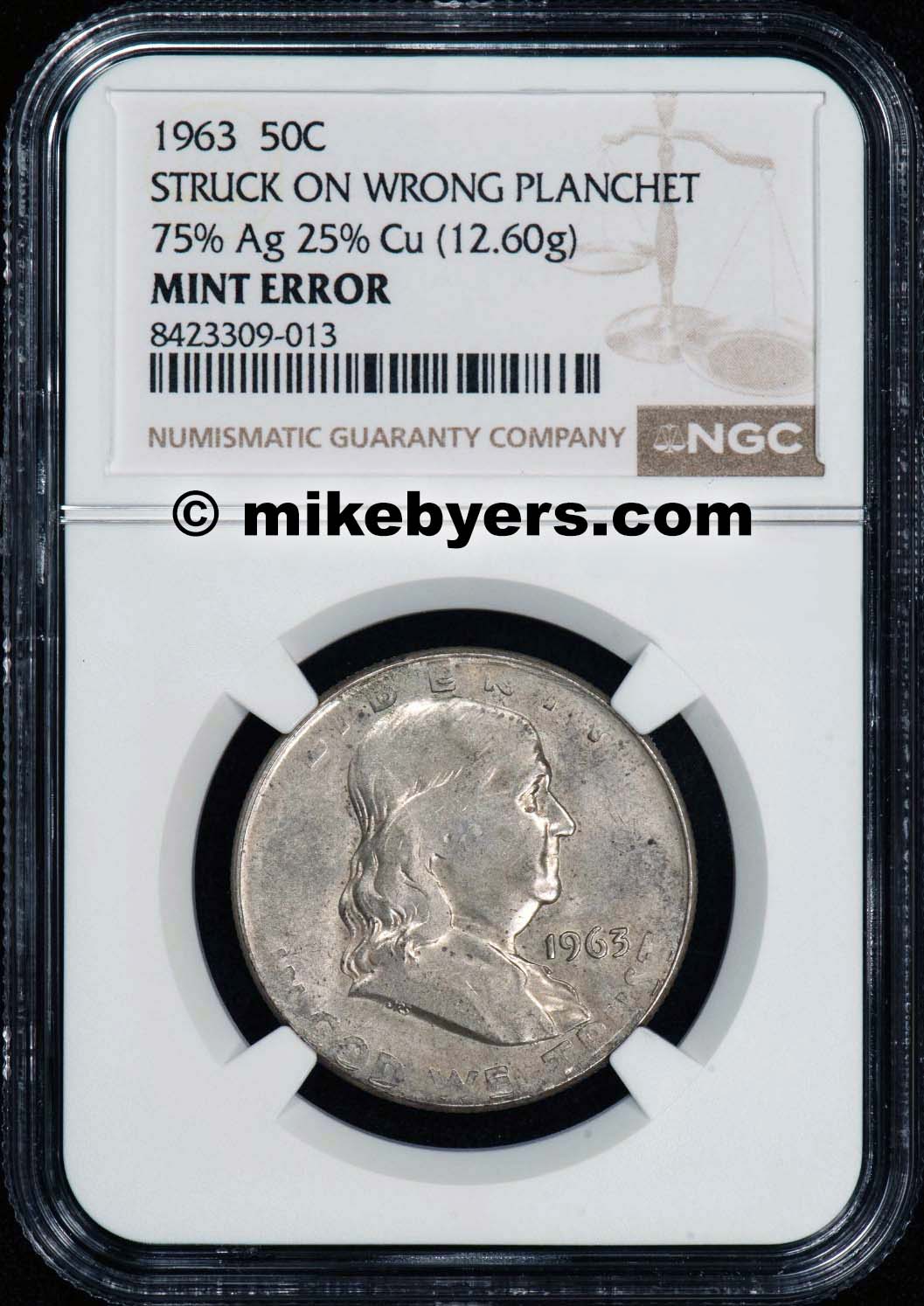
1963 Franklin Half Dollar
Struck on Wrong Planchet
75% Silver, 25% Copper - 12.60 grams
Likely an Experimental Test Piece
NGC Mint Error
UNIQUE
$40,000

Experimental Planchet Strips & Test Strikes
In 1963, the U.S. Treasury Department hired the Battelle Memorial Institute to investigate and study solutions to address the upcoming transition from 90% silver to other compositions, and to oversee the production of pattern dime-sized, quarter-sized, and half dollar-sized experimental coins. Battelle supplied the U.S. Mint with experimental planchet strips of different compositions that were used to produce planchets for test strikes.
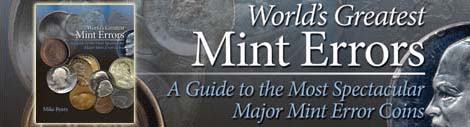
Sculptor-Engraver Edward R. Grove joined the U.S. Mint staff in 1962 and designed the Martha Washington dies to strike the test pieces. Grove designed the obverse and signed it with his initials below Martha's bust. U.S. Mint Sculptor-Engraver Philip Fowler designed the reverse depicting Mount Vernon. This die design was used in the 1960s to strike experimental silver, silver-copper, silver-clad and clad coinage. This design was also used in 1982 for the experimental striking for new compositions for the U.S. cent, and in 1999 for the new Sacagawea dollar.
The U.S. Mint was established in 1792 and struck patterns and experimental test coins prior to striking circulation coins in 1793. Many experimental test pieces struck by the U.S. Mint are only known by footnotes in official government reports. There is no official complete documentation recording all of the experimental pieces and test strikes. Even decades later, unknown experimental pieces and test strikes are discovered, authenticated and certified by NGC and PCGS, and enter the numismatic marketplace. The reference book United States Pattern Coins, the bible on U.S. pattern, experimental and test coinage, lists each denomination of the Martha Washington test pieces for each composition with individual Judd numbers. Additionally, the U.S. Patterns website (uspatterns.com) continually updates new information and new discoveries, including the Martha Washington test dies used to strike the test coins.
On Feb. 12, 1965, the Battelle Memorial Institute issued their Final Report on A Study of Alloys Suitable for Use as United States Coinage to the U.S. Department of the Treasury, documenting their conclusions regarding their research, experimental striking, and recommendations for the new compositions for our nation's coinage:
A number of possible candidate materials were selected and taken to the Philadelphia Mint in the form of rolled strip to determine how well they could be blanked and upset, and coined. ... For the actual coining process, special dies were prepared by the Mint designers and engravers, which would duplicate as nearly as possible both the obverse and reverse design features of a typical dime, quarter, and half-dollar.
Click here for the 135 page report...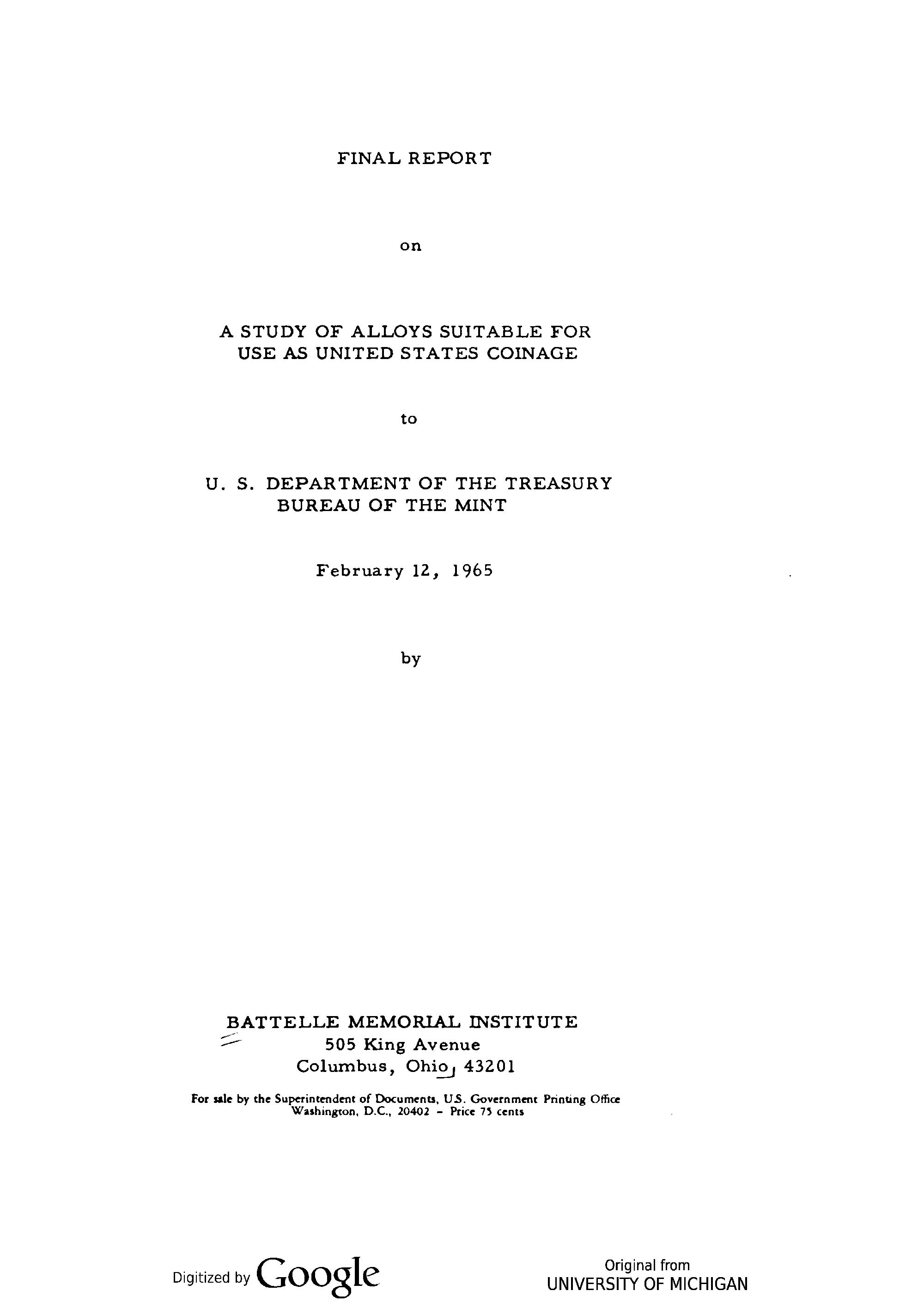 |
The report is very detailed, discussing all options for the new compositions, the different percentages of silver, silver-copper, silver clad, and clad, both with bonded layers and with mixed alloy. Of interest as well, on page 9, is the reference to the 1963 calendar year when there was a deficit of 209 million ounces of silver. This fact, and the rising price of silver, created the urgent need to produce new coinage with less silver, and eventually with no silver at all. 1963 was the last year of the Franklin Half Dollar.
This report also goes into great length starting on page 35, discussing the best solutions to reduce the percentage of silver in our coinage. Suggestions of 50% silver-50% copper, 80% silver-20% copper on copper, and high silver-copper alloy on low silver-copper alloy were discussed. Additional compositions were tested at Battelle.
This Franklin Half Dollar off-metal was struck during the time period that the U.S. Mint was experimenting for the transition from 90% silver. It does not match the exact composition of the experimental planchet strips mentioned in the Battelle report and may have been struck prior to their contract.
Coin World Article
Coin World published a detailed article on April 23, 2015 examining the 50 year anniversary of the Coinage Act of 1965 and described how Battelle Memorial Institute was involved in striking Martha Washington experimental test pieces for the transition to 40% silver and clad coinage. Click here for the Coin World article...
This Unique Franklin Half Dollar Discovery
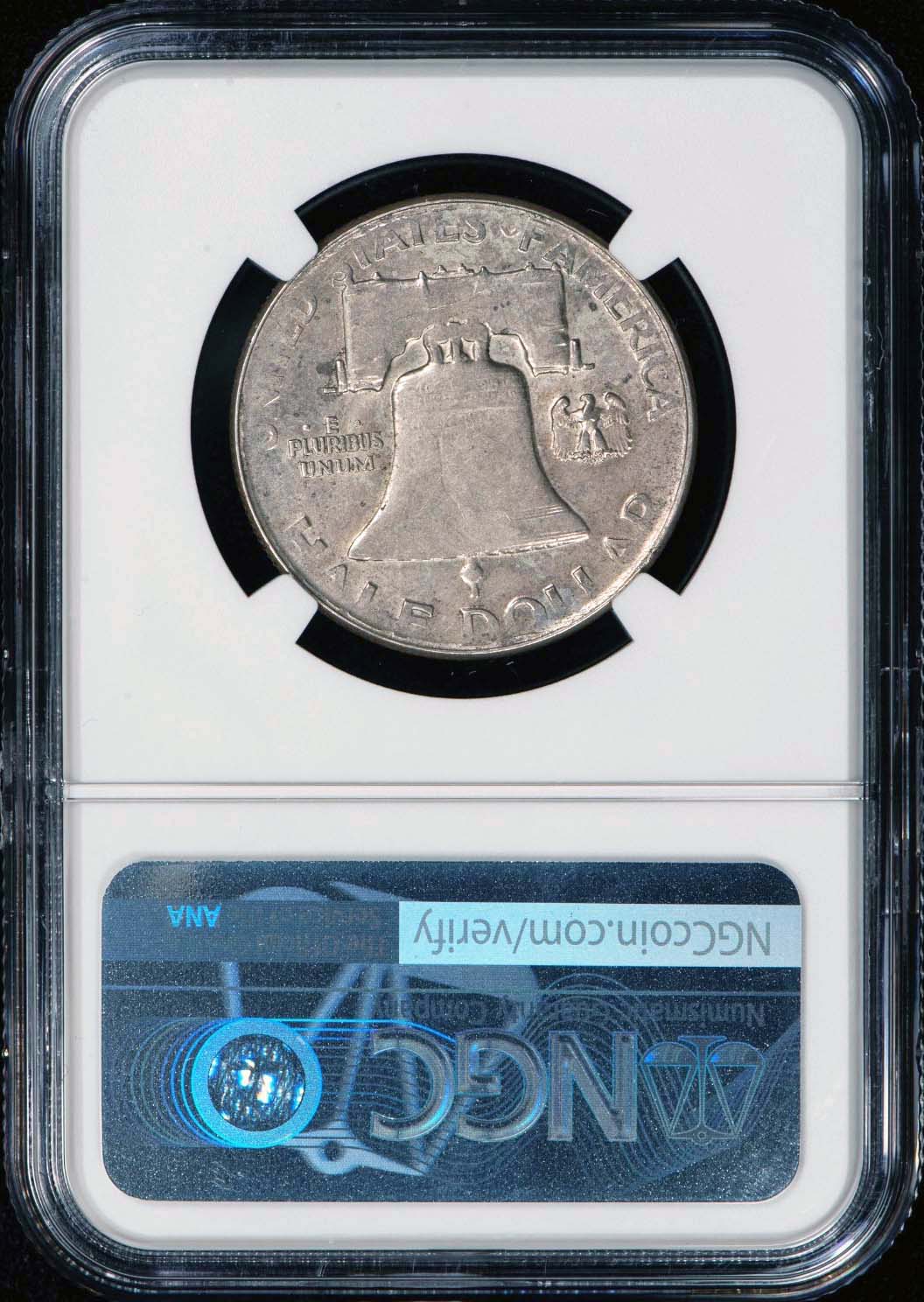
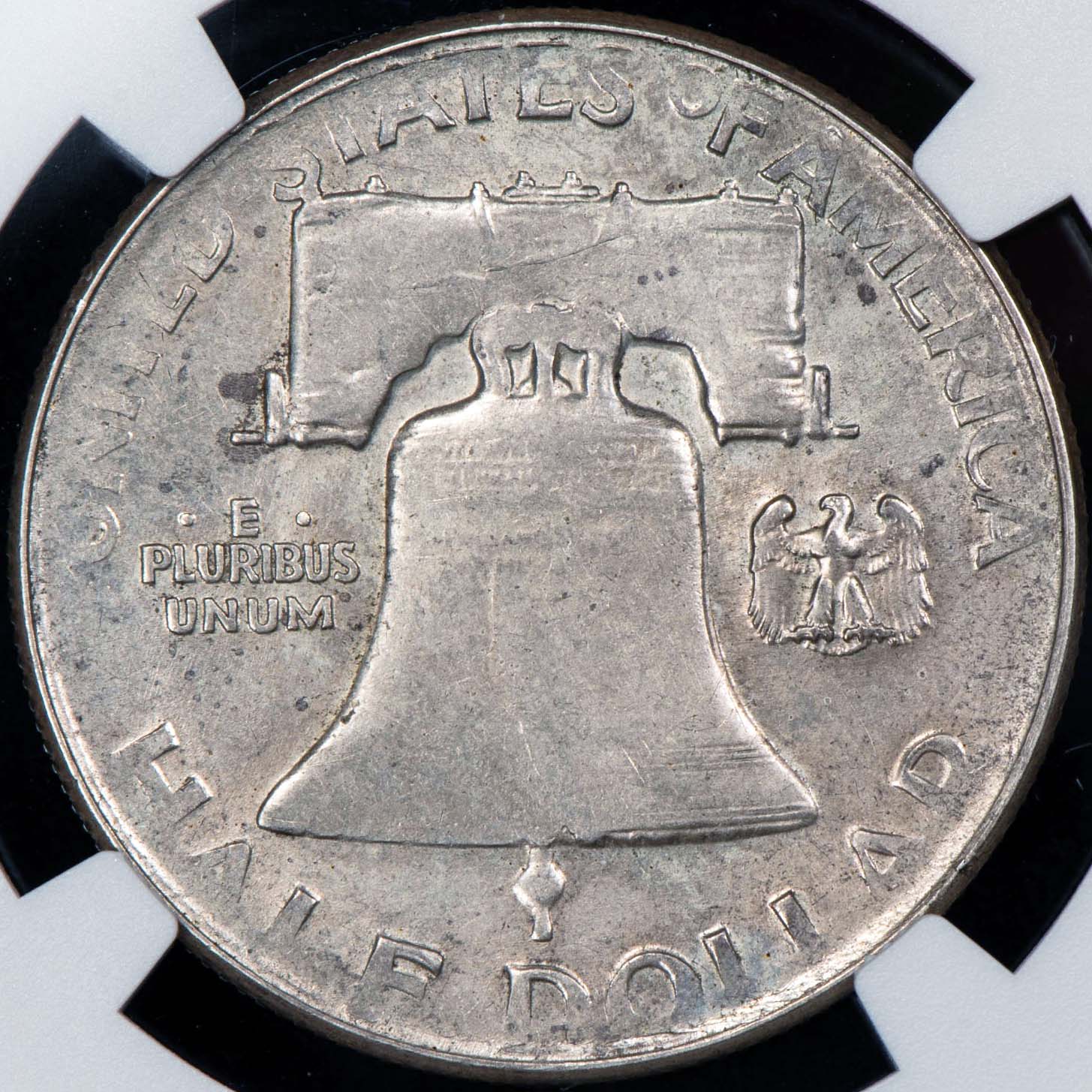
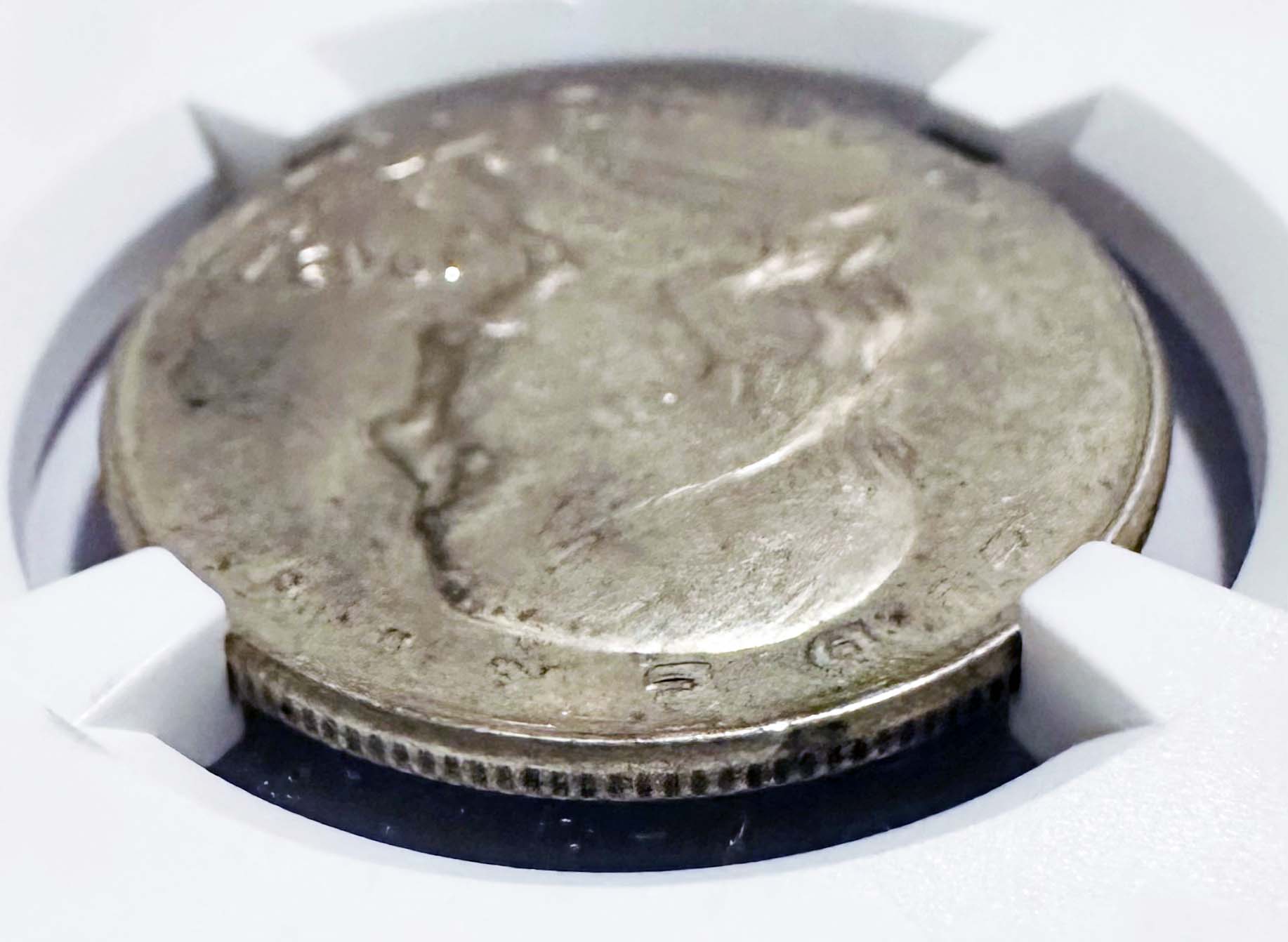
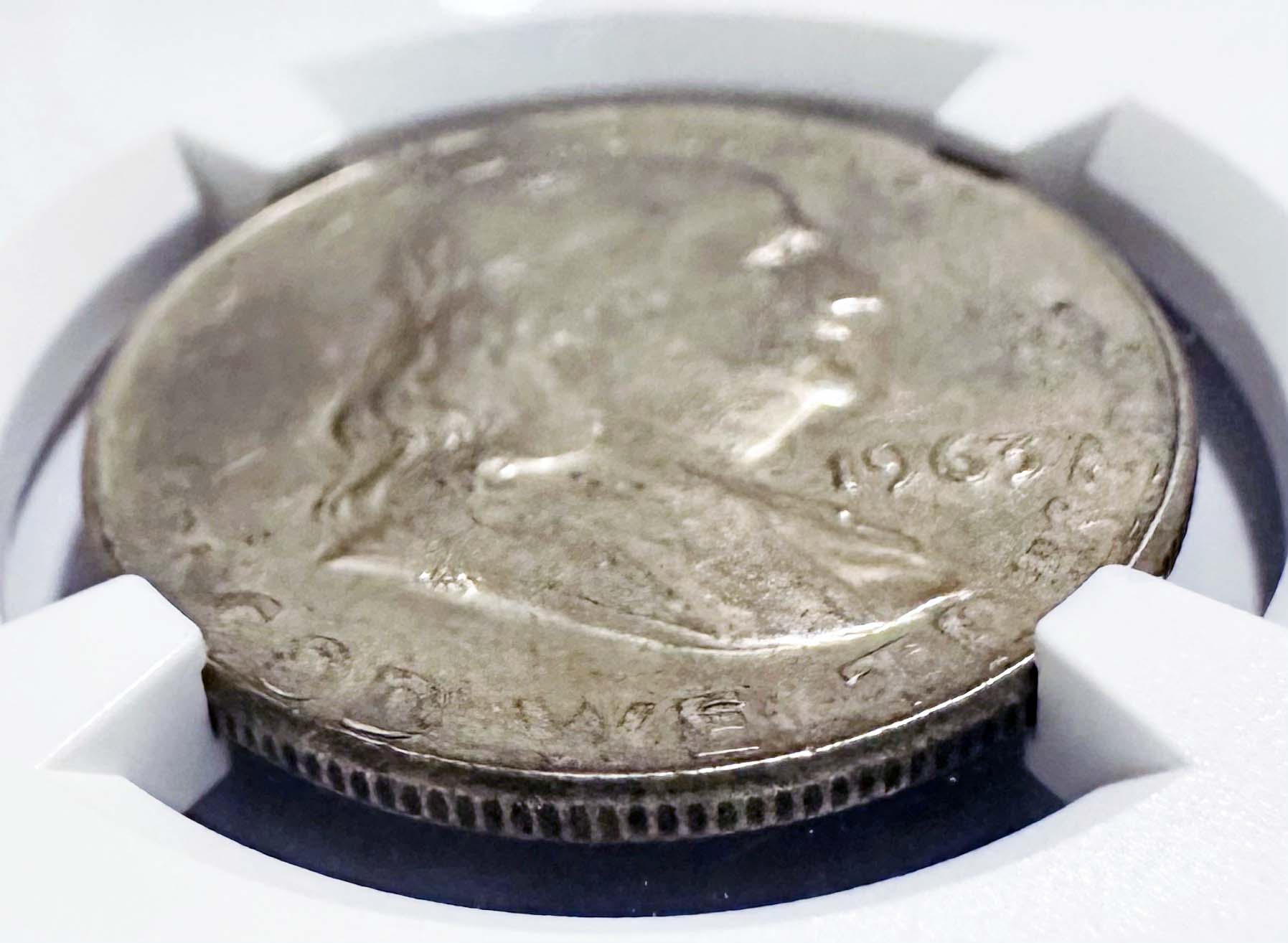
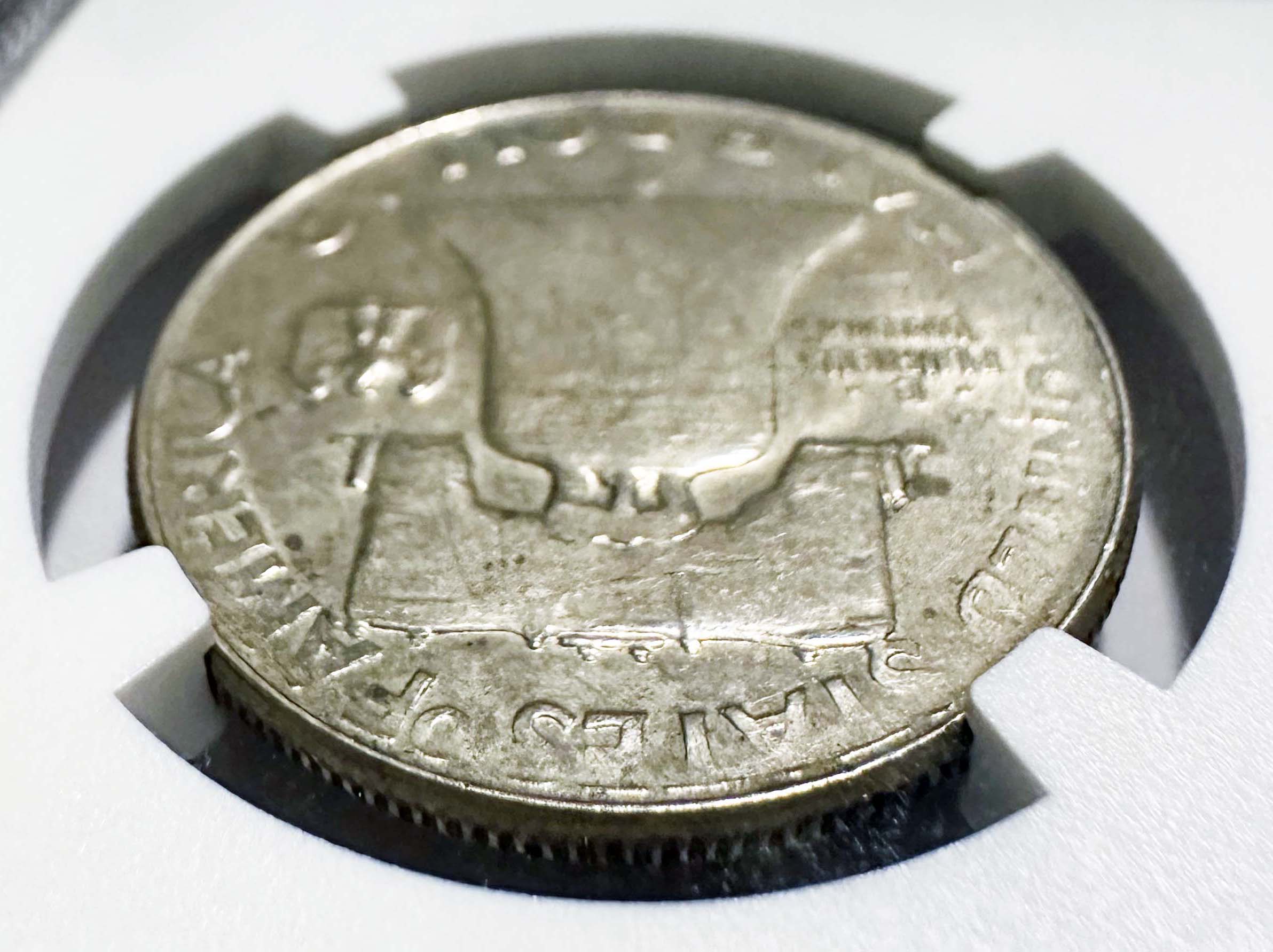
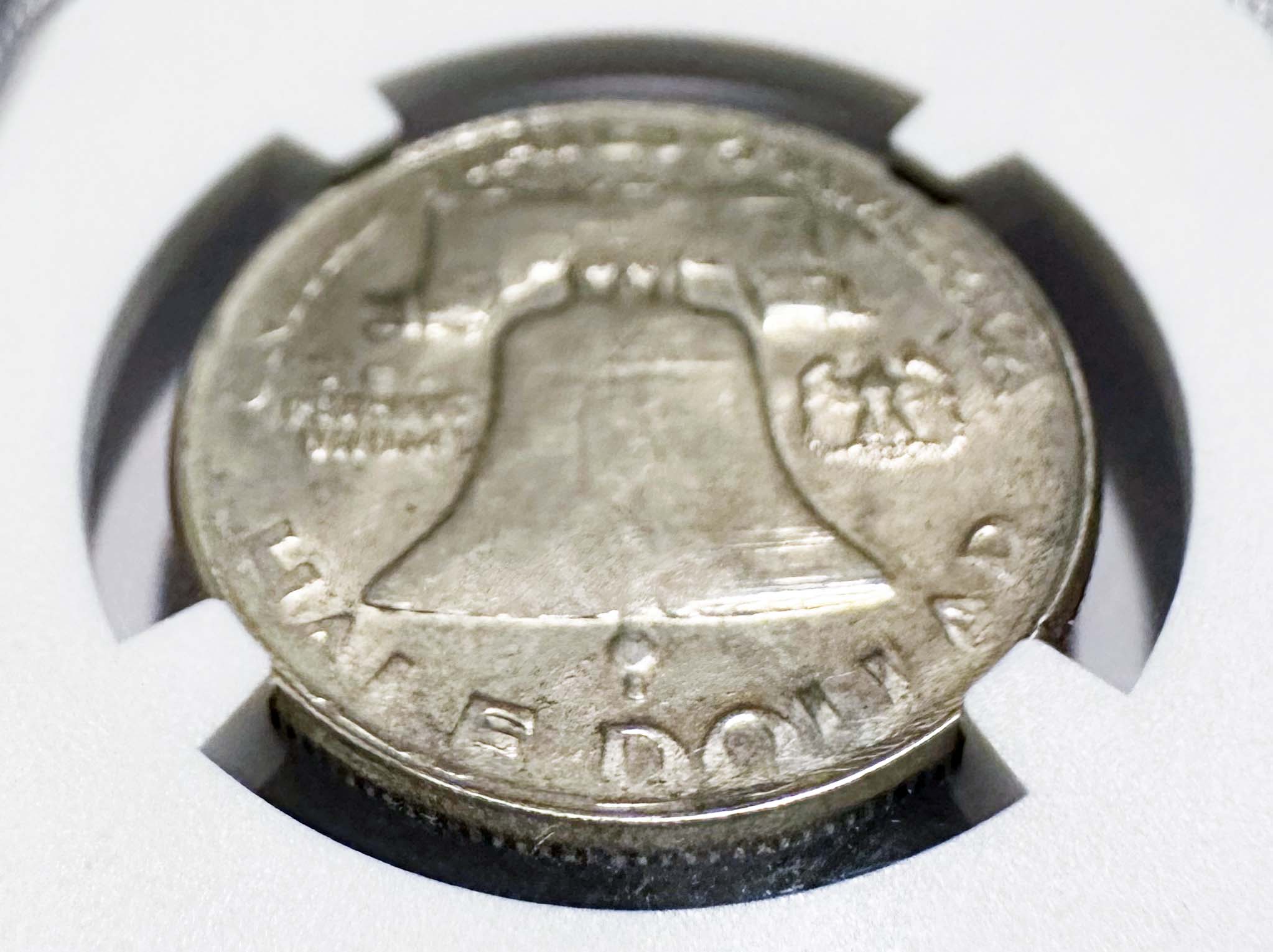
This 1963 Franklin Half Dollar was struck on a wrong planchet with a composition of 75% silver and 25% copper and a weight of 12.60 grams. It was authenticated and certified as a mint error by NGC.
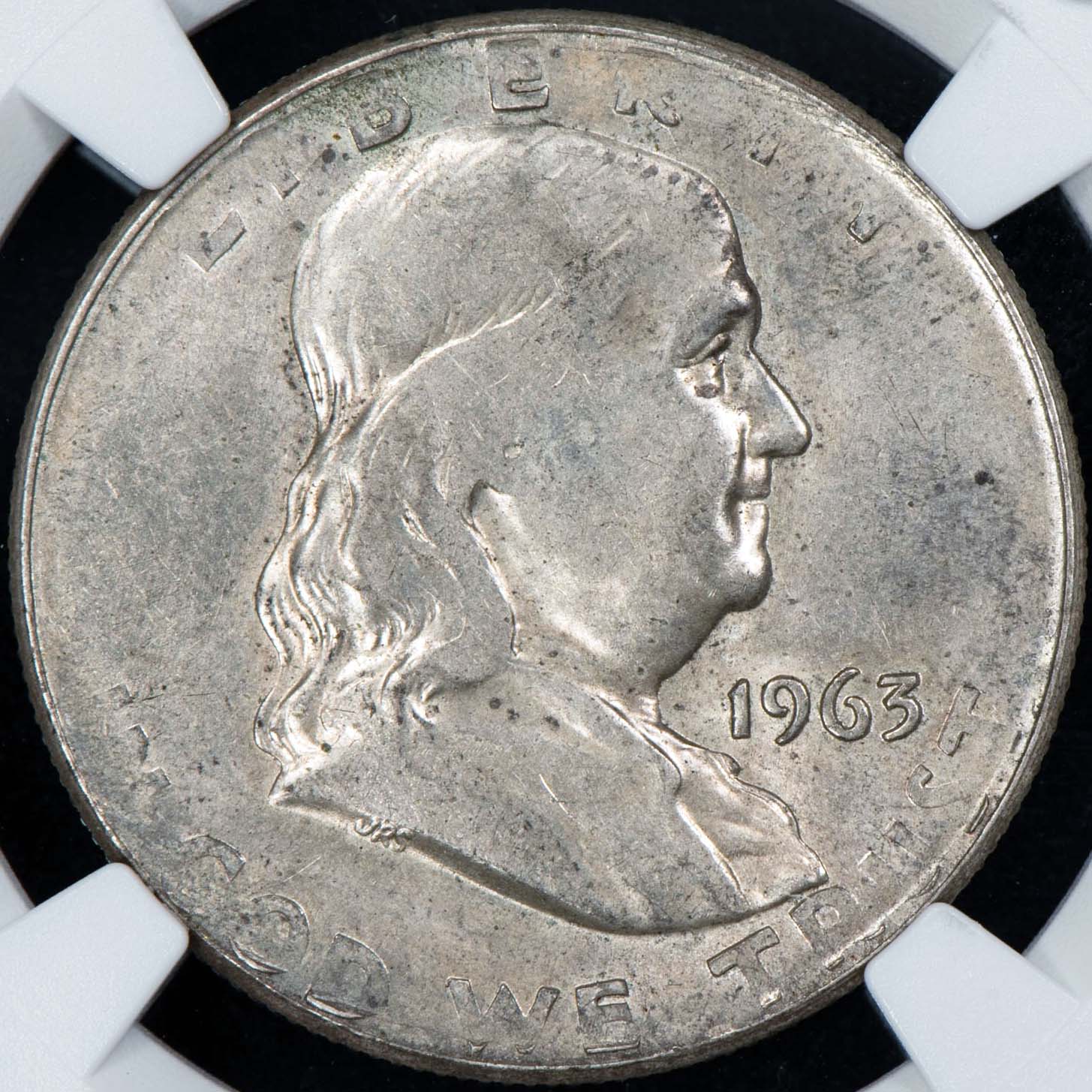
This Franklin Half Dollar planchet has a composition of 25% copper, not 10%. Copper is less dense than silver, the metal is harder, and the dies were set up with the correct pressure to strike 90% silver planchets. This accounts for the weak strike. This half dollar has a partial collar with incomplete reeding since it did not sit in the collar properly. The reeding is only visible in the middle of the edge. It is not unusual for test pieces to be weakly struck. It is uncirculated, with full luster and light original toning.
This Franklin Half Dollar off-metal mint error holds an esteemed place in a very special category amidst U.S. federal coinage. It is unique, enigmatic, and likely an experimental test piece. It was either intentionally or accidentally struck during a period in the 1960s when the U.S. Mint transitioned from 90% silver coinage.
Analyzing This Mint Error
Upon examining this Franklin Half Dollar, several scenarios immediately came to mind. Based on my 50 year experience as a internationally recognized expert on mint errors, die trials, patterns and experimental strikes, I quickly eliminated two possibilities.
It was not struck on a foreign planchet. No foreign coins struck by the U.S. Mint match anything even close to this composition and weight. The only foreign coins struck by the U.S. Mint on 75% silver and 25% copper planchets were for the Philippines decades before this Franklin Half Dollar was struck. All of those planchets were smaller in diameter and thickness when compared to a Franklin Half Dollar planchet. The Mint Error News website has a 69 page report of coins struck by the U.S. Mint for foreign countries. It is the most comprehensive report available anywhere. Click here for a PDF of the 69 page report.

It was not struck on a planchet with an improper alloy mix. NGC, after conducting a metallurgical analysis, determined that it was struck on a wrong planchet with a composition of 75% silver and 25% copper. There are no known Franklin Half Dollars struck with an improper alloy. The vast majority of improper alloy mint errors occurred on Lincoln cents dated in the early 1940s, during World War II. For example, if this Franklin Half Dollar had a composition of 88% silver and 12% copper, which is close to the regular composition of 90% silver and 10% copper, then the most logical explanation is an improper alloy mix. Since this Franklin Half Dollar is designated as struck on a wrong planchet with an exact ratio of 75% silver and 25% copper, this unique discovery coin is likely an Experimental Test Piece.
The Scenario That Explains This Mint Error
The following scenario explains why this unique Franklin Half Dollar off-metal was struck. The fact that it is exactly 75% silver and 25% copper, and struck during a time frame when the U.S. Mint was conducting experimental striking of half dollars in different silver compositions, leads to the conclusion that it is an experimental strike. Either a U.S. Mint official placed this 75% silver and 25% copper planchet in the collar with the dies set up using the Franklin half dollar design, or it was accidentally mixed in with the 90% silver and 10% copper planchets and subsequently struck by Franklin half dollar dies.
How can a 75% silver and 25% copper planchet end up being struck by Franklin half dollar dies? This isn't the first time that the U.S. Mint has mixed up planchets before. A few of the more famous examples are the 1943 copper Lincoln cents, the 1944 steel Lincoln cents, and the Denver Mint Eisenhower dollars and Kennedy half dollars struck on silver planchets from the San Francisco Mint.
In addition to this unique Franklin Half Dollar struck on a 75% silver and 25% copper planchet, there are other unique mint errors known that defy logic and were struck on wrong planchets during the 1960s when the U.S. Mint conducted the experimental strikes. This occurred during the transition from 90% silver coinage to 40% silver to clad, illustrating that testing was conducted over several years. Not every test or experimental strike was fully documented.
This Martha Washington half dollar-size test piece was accidentally struck on a quarter planchet and is unique. It sold in a Heritage 3/2003 sale for $29,900 and resold for $21,850 in a Heritage 2004 ANA sale.
Struck On A Quarter Planchet In Error 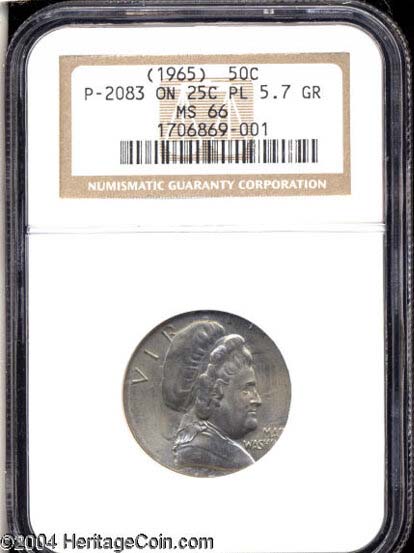 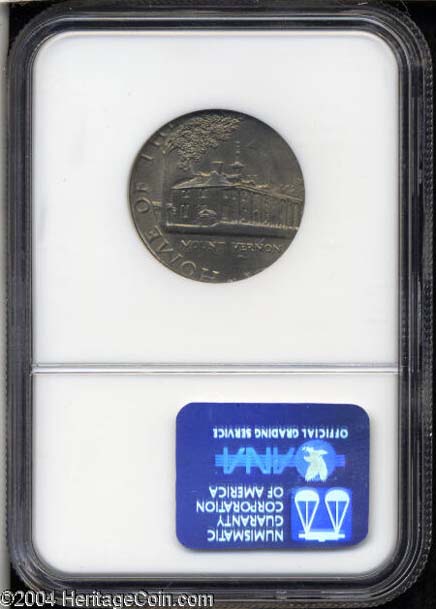 |
This unique 1961-D Jefferson Nickel was struck on a CLAD dime planchet. Although a mint error, and since clad coinage was not used until 1965, this is another example of experimental composition tested by the U.S. Mint years prior to the adoption of that composition for our coinage.
Copper-Nickel Clad Dime Planchet 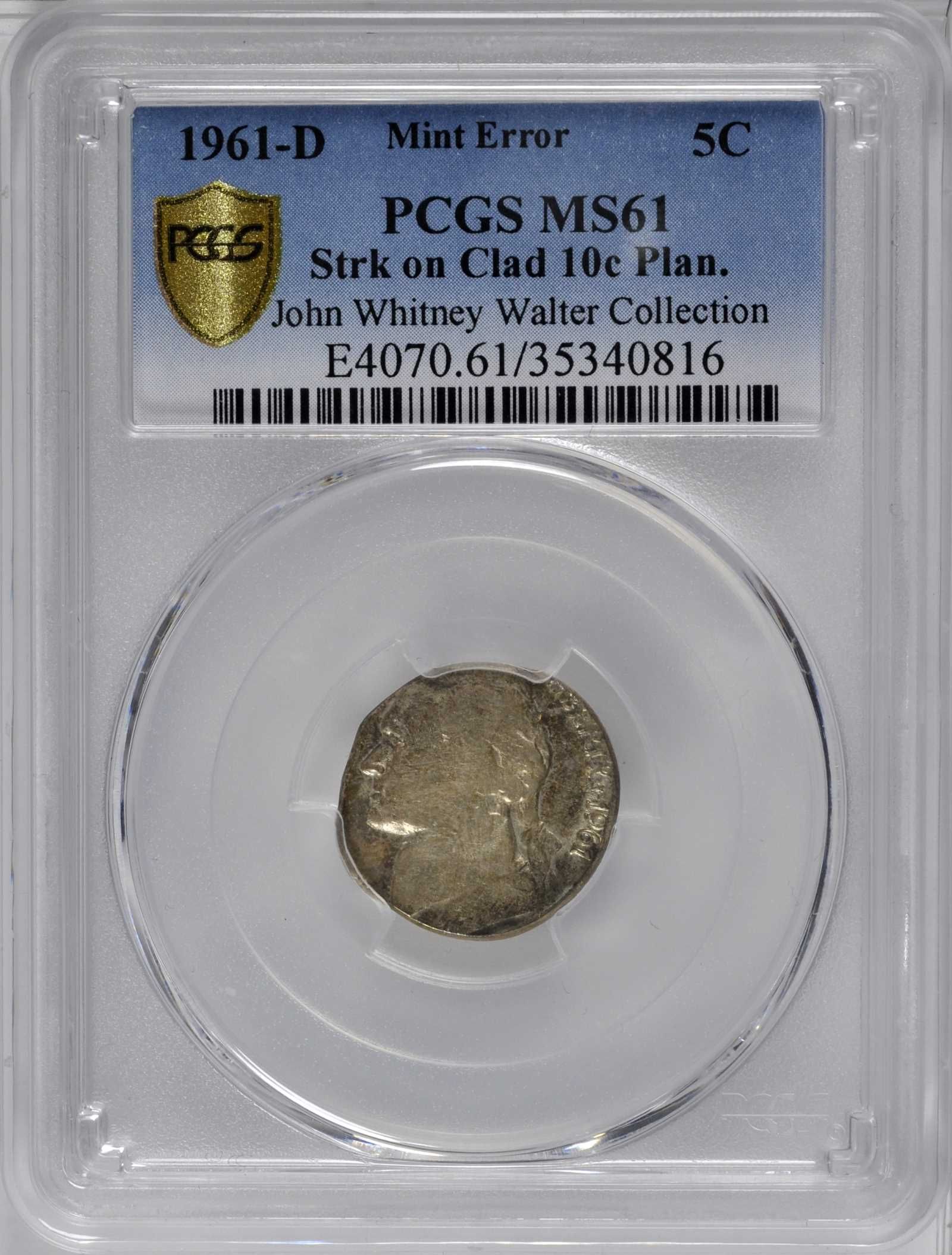 |
This unique half dollar off-metal is surrounded in mystery. It is a 1965 Kennedy Half Dollar struck on a 75% copper and 25% silver planchet. Once again, there is no match to any foreign coin struck by the U.S. Mint.
on a 75% Cu, 25% Ag Planchet 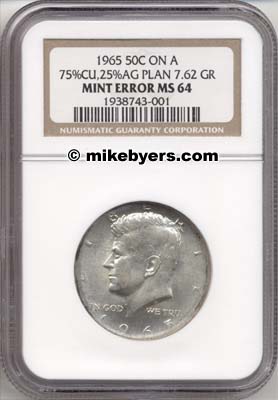 |
Additional Information
Here is additional information on the uncancelled Martha Washington proof half dollar-size test dies, the Martha Washington test pieces in the Smithsonian, images of Martha Washington test pieces in different compositions, and information from U.S. Patterns listing all of the Judd numbers for the half dollar-size test pieces.
| Here is a genuine U.S. Philadelphia Mint made pair of uncancelled dies of the Martha Washington half dollar-size obverse and reverse in proof. This pair is unique in private hands and was used by the U.S. Mint and private contractors to test experimental coinage in the 1960s through 2011. Used to Strike Half Dollar Experimental Test Pieces for U.S. Judd #2131-2143 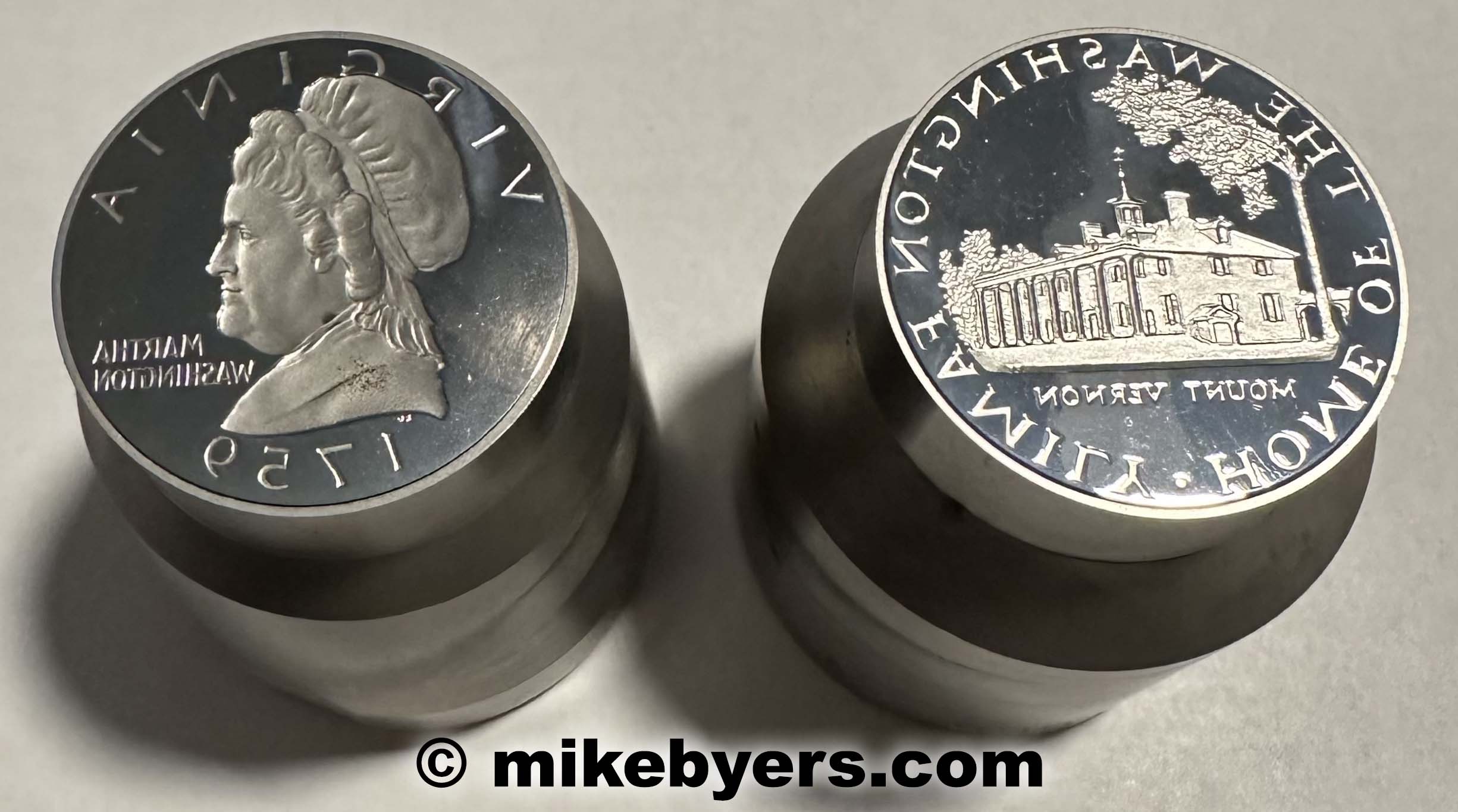 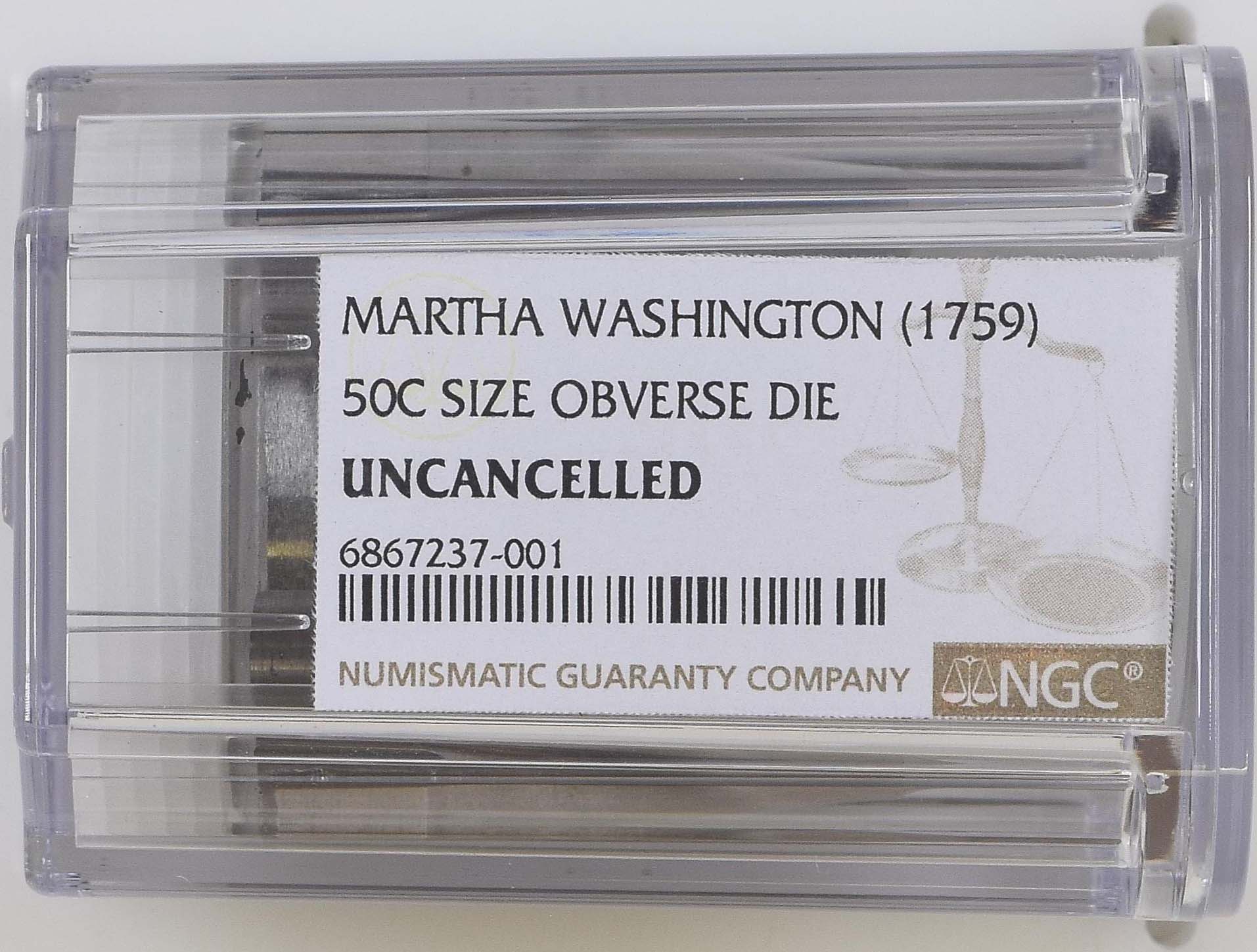 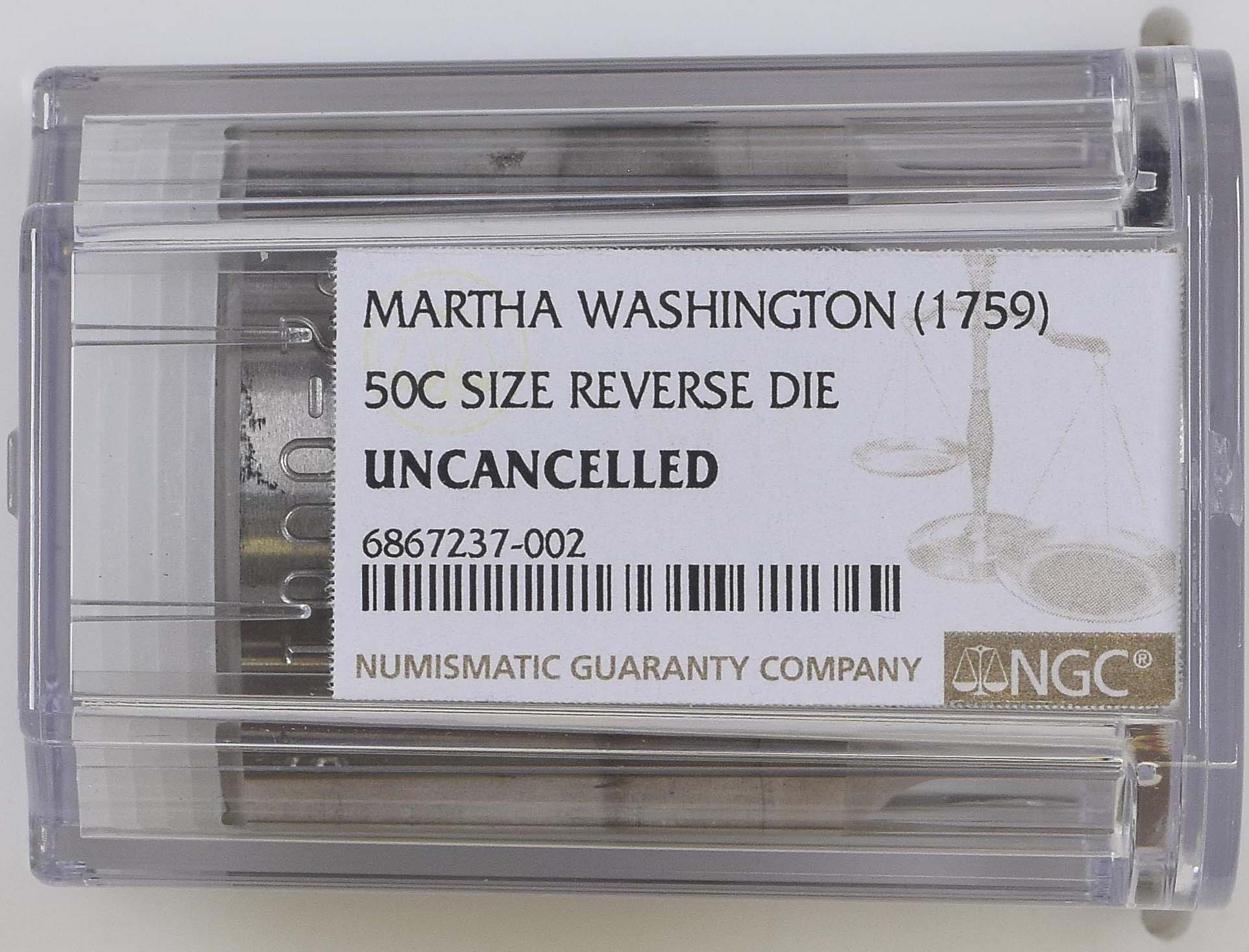 |
Here are some of the Martha Washington quarter-size test pieces in different compositions, including 50% Silver - 50% Copper and a Coin Silver - Copper Multilayer Composite. Also pictured is a silver 1964 Washington Quarter which changed to clad composition in 1965.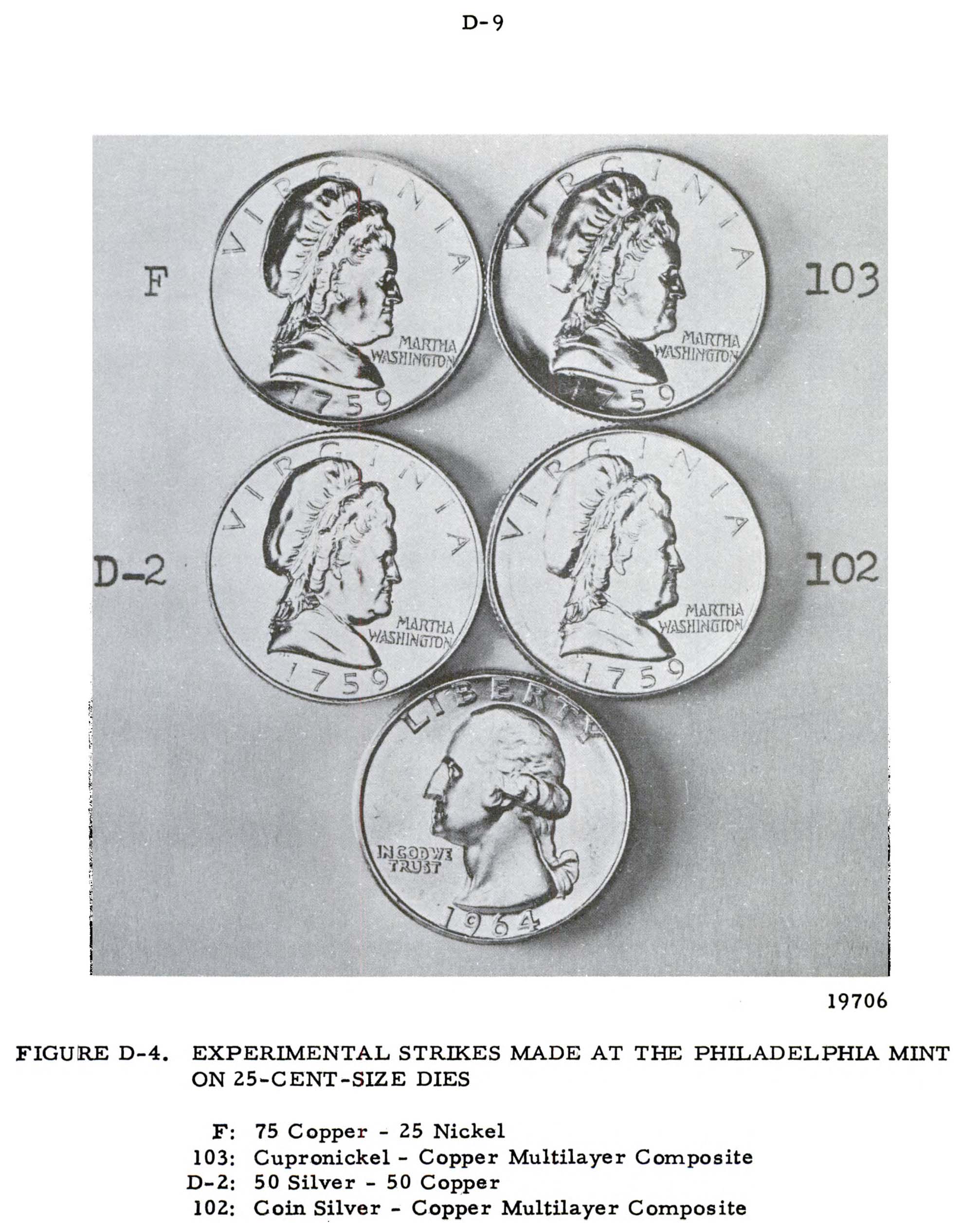 |
encased in Lucite, reside in the Smithsonian: 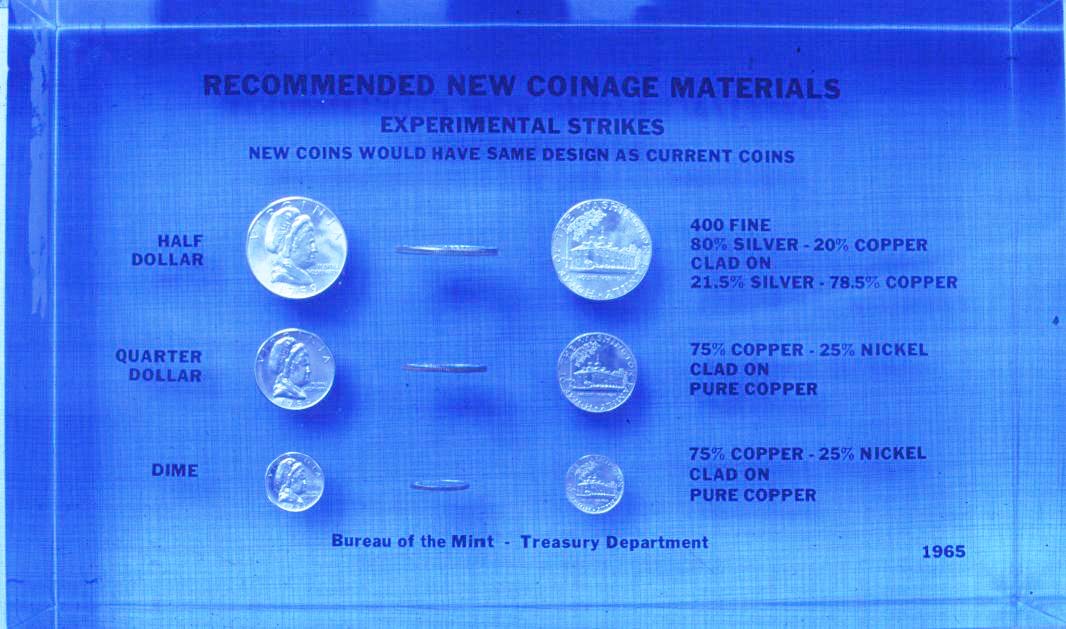 Photo courtesy of the National Numismatic Collection of the Smithsonian Institution |
The reference book United States Pattern Coins, the bible on U.S. pattern, experimental and test coinage, lists each denomination of the Martha Washington test pieces for each composition with individual Judd numbers. Additionally, the U.S. Patterns website (uspatterns.com) continually updates new information and new discoveries, including the Martha Washington test dies used to strike the test coins.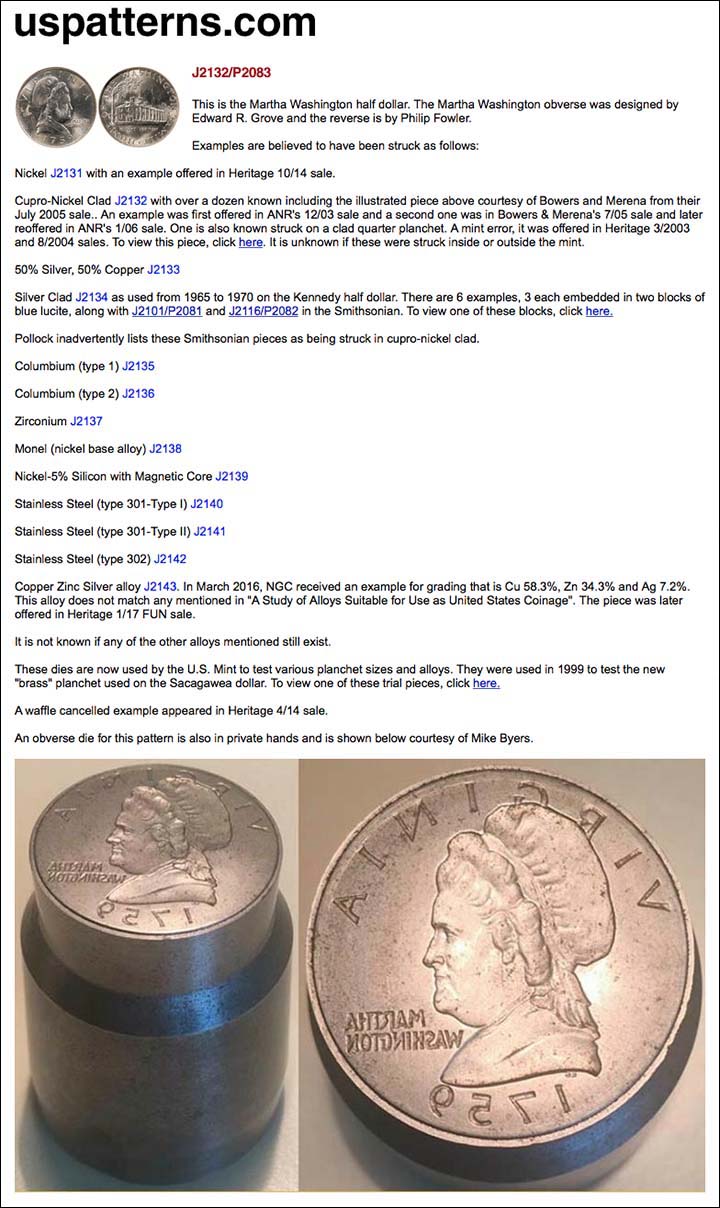 |


Featured on the cover of
Mint Error News Magazine Issue 89:
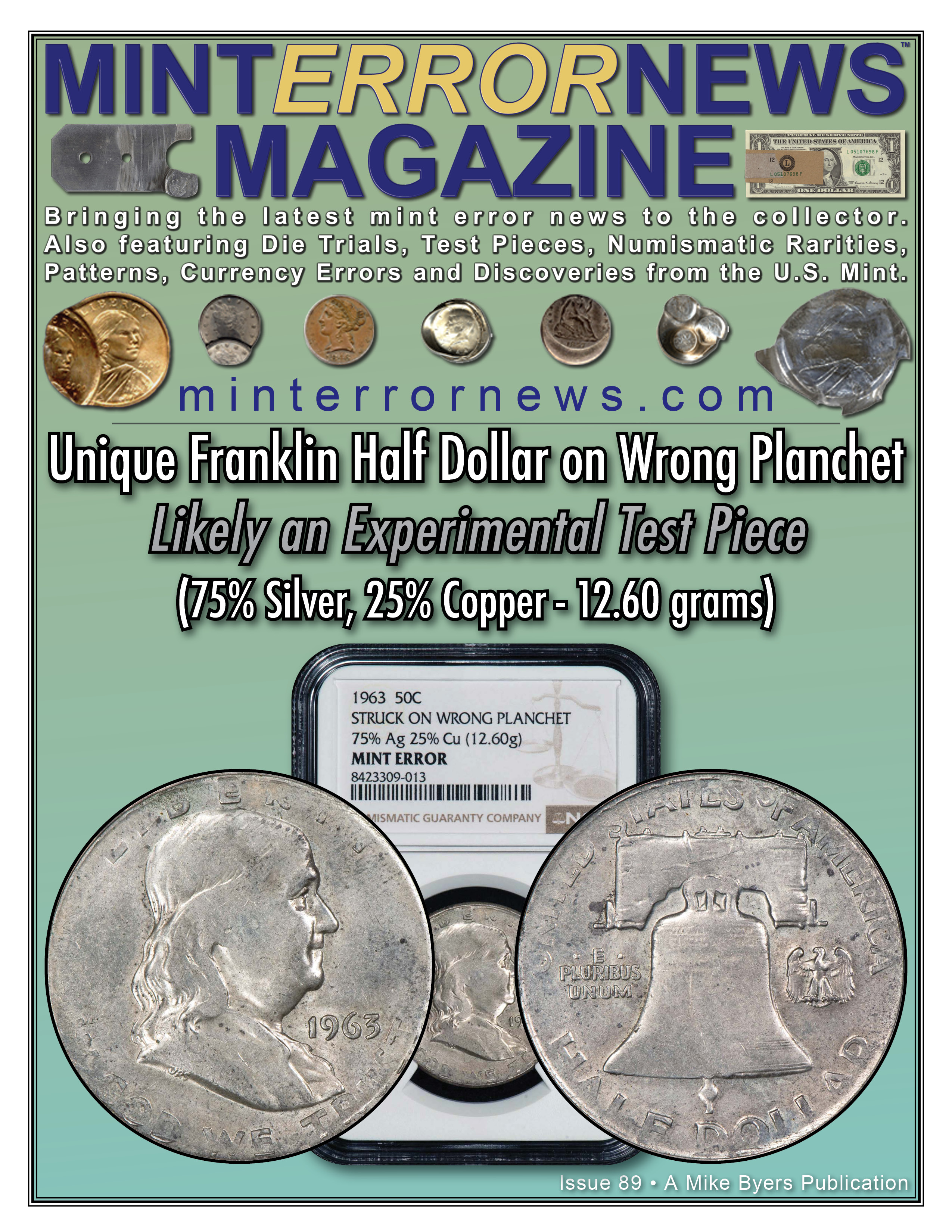
Experimental Strikes and Martha Washington Test Pieces
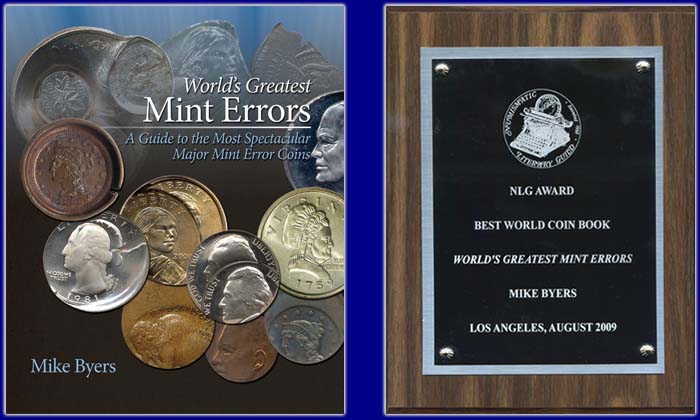
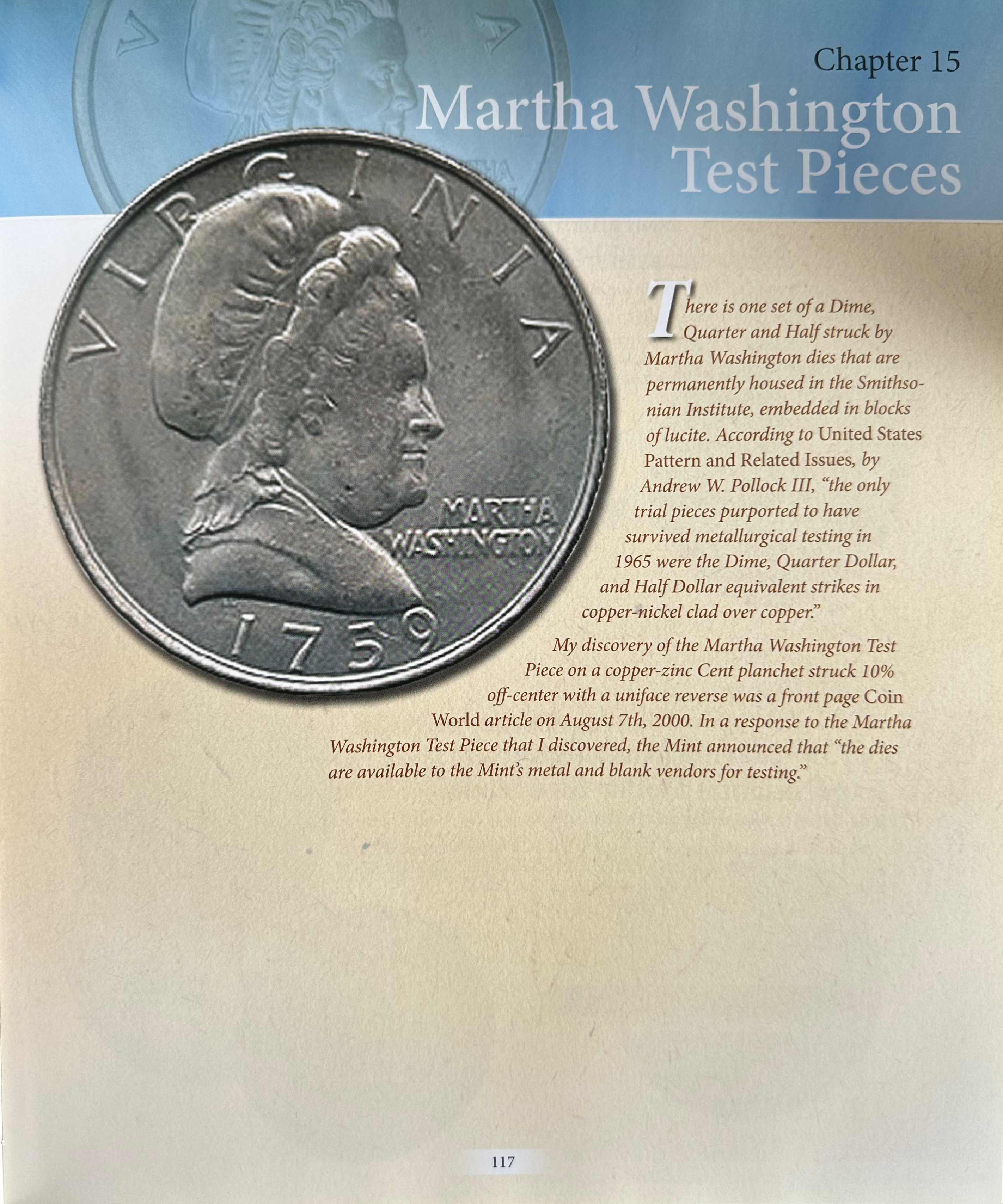
are featured in my NLG Award winning book,
World's Greatest Mint Errors.